Study Skills Resources

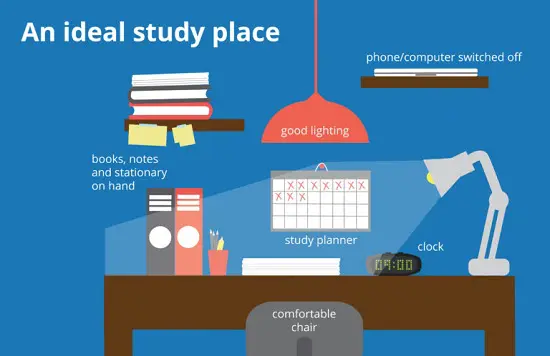
Creating the ideal study space
Before you start your revision, there are a few simple steps you can take to create a comfortable and well-organised study space…
- Make sure you have a desk, chair and good lighting and heating when required.
- Have all your books and stationery on hand.
- Avoid clutter.
- Have your daily / weekly planner where you can see it.
- Turn off your phone!
Remember, your ideal study setting is unique to you, so experiment with a few ideas until you discover what works best.
Making the Best Possible Start
Getting organised, setting goals, building a plan, and studying in the ways that work.
How To Make A Study Timetable
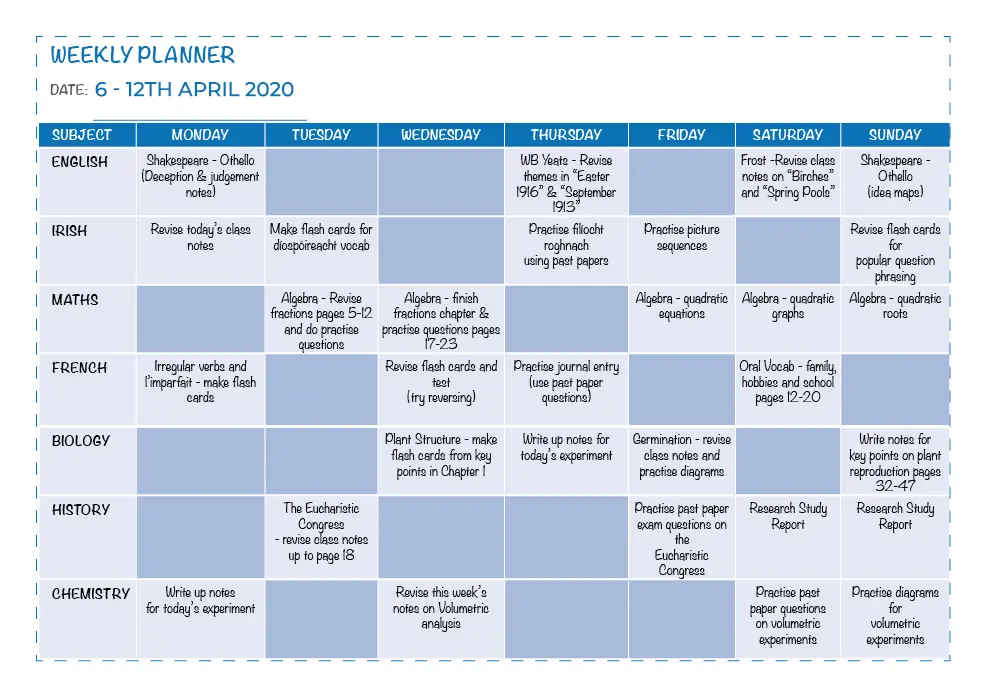
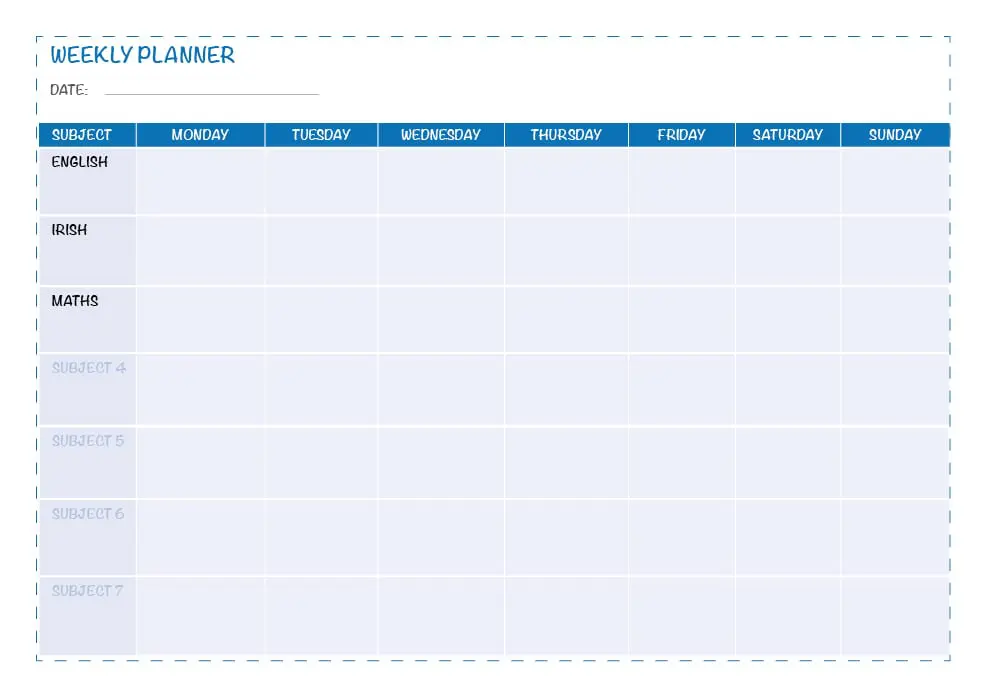
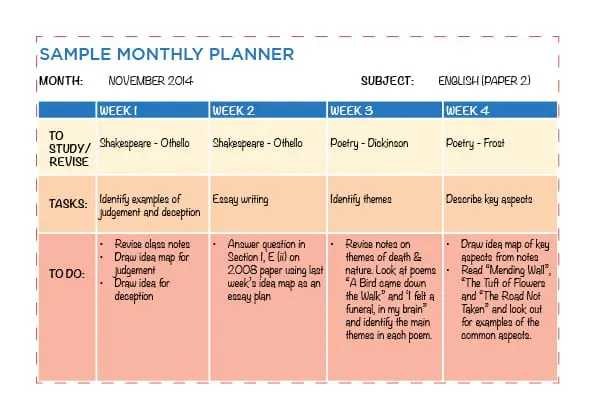
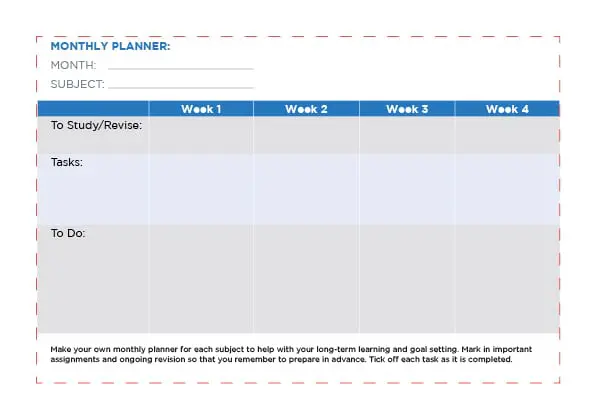
A well thought-out study plan will give you structure and help you stay organised. Below are some useful examples and blank templates to help you start planning now!
Weekly Study Plan
Plan in advance
Fill out your weekly study plan each Sunday in preparation for the week ahead.
Be specific
Itemise what you plan to study in each subject (For example, in English on Wednesday you might revise the poetry of Sylvia Plath).
Plan your breaks
Remember to leave time for breaks and be realistic in your goal setting.
Stick to the plan!
Stick the timetable on a wall in your study area or save it on your iPad and refer to it during your homework and study hours to make sure you keep on track.
Monthly Study Plan
Plan in advance
Fill out your monthly study plan at the beginning of each term.
Plan by Subject
Make a study plan for each subject. This will help you with your long-term learning and goal setting.
Include Assignments and Tests
Mark in important assignments and ongoing revision tests for each subject so that you remember to prepare in advance.
Track your Progress
Tick off each task as it is completed. This will help you keep track of your progress throughout the year.